
Showing posts with label education. Show all posts
Showing posts with label education. Show all posts
Saturday, October 6, 2012
Finally a Safe Hello World
It's very common for Hello World example apps in textbooks or other educational literature to promote insecure software building practices right out of the gate. What a breath of fresh air to see the Microsoft MVC folks safely HTML encoding (to avoid XSS) in their MVC4 Hello World application!


Monday, April 16, 2012
Free OWASP .NET Development E-Book

Saturday, March 31, 2012
Stanford University Online Cryptography Course
 Stanford University has a free online Cryptography Course. Looks very interesting for someone who wants to peel back the layers of the onion, but isn't scared off by the math. (Many applied cryptographers aren't necessarily experts in the theoretical mathematical aspects and vice versa.)
Professor Dan Boneh gives an introduction to the course:
Friday, February 18, 2011
Seven Types of Hackers
This could also be titled "Taxonomies are Difficult".
...
Roger Grimes at InfoWorld has a Seven Types of Hackers article. Taxonomies are generally tough to do, and I think Roger could improve upon his list a bit. Let's break it down ...
The #1 problem I have with this label is that all of the activities in the list are typically "crimes" in most jurisdictions. Therefore, people who participate in them are "criminals". And "Cyber" is an annoying word on many levels, but Joe Sixpack will associate that term with computers. I would have chosen "Petty Thieves" as a better label for this category.
I am not sure how "adware spreaders" fits for a good taxonomy name, but generally agree this is a legitimate category in and of itself.
I find Category #3 ridiculously similar to Category #4. The only difference is whether they are free-lance (#3) or directly on the payroll (#4). Either way, I'd collapse these two categories into a single category.
Hacktivisism may be a webism, but it's probably it's own category-- political activism through criminal operations on computer systems.
I despise the term "cyber warrior" or its parent "cyber warfare". Call it what it is: militaries and their contractors attacking each other. Criminal operations involving computers for a militaristic goal. So a much better title: Military & Military Contractors.
I'm also not a big fan of this label. It could just as easily be called "Internet Graffiti".
Taxonomies are difficult-- very difficult-- to lay down on paper (or bits). If I were grading this one, I'd give it about a B- or maybe a B. It's far from grade A material, but it has its entertainment value.
...
Roger Grimes at InfoWorld has a Seven Types of Hackers article. Taxonomies are generally tough to do, and I think Roger could improve upon his list a bit. Let's break it down ...
Malicious hacker No. 1: Cyber criminals
Professional criminals comprise the biggest group of malicious hackers, using malware and exploits to steal money. It doesn't matter how they do it, whether they're manipulating your bank account, using your credit card numbers, faking antivirus programs, or stealing your identity or passwords. Their motivation is fast, big financial gain.
The #1 problem I have with this label is that all of the activities in the list are typically "crimes" in most jurisdictions. Therefore, people who participate in them are "criminals". And "Cyber" is an annoying word on many levels, but Joe Sixpack will associate that term with computers. I would have chosen "Petty Thieves" as a better label for this category.
Malicious hacker No. 2: Spammers and adware spreaders
Purveyors of spam and adware make their money through illegal advertising, either getting paid by a legitimate company for pushing business their way or by selling their own products. Cheap Viagra, anyone? Members of this group believe they are just "aggressive marketers." It helps them sleep at night.
I am not sure how "adware spreaders" fits for a good taxonomy name, but generally agree this is a legitimate category in and of itself.
Malicious hacker No. 3: Advanced persistent threat (APT) agents
Intruders engaging in APT-style attacks represent well-organized, well-funded groups -- often located in a "safe harbor" country -- and they're out to steal a company's intellectual property. They aren't out for quick financial gain like cyber criminals; they're in it for the long haul. Their dream assignment is to essentially duplicate their victim's best ideas and products in their own homeland, or to sell the information they've purloined to the highest bidder.
Malicious hacker No. 4: Corporate spies
Corporate spying is not new; it's just significantly easier to do, thanks to today's pervasive Internet connectivity. Corporate spies are usually interested in a particular piece of intellectual property or competitive information. They differ from APT agents in that they don't have to be located in a safe-harbor country. Corporate espionage groups aren't usually as organized as APT groups, and they are more focused on short- to midterm financial gains.
I find Category #3 ridiculously similar to Category #4. The only difference is whether they are free-lance (#3) or directly on the payroll (#4). Either way, I'd collapse these two categories into a single category.
Malicious hacker No. 5: Hacktivists
Lots of hackers are motivated by political, religious, environmental, or other personal beliefs. They are usually content with embarrassing their opponents or defacing their websites, although they can slip into corporate-espionage mode if it means they can weaken the opponent. Think WikiLeaks.
Hacktivisism may be a webism, but it's probably it's own category-- political activism through criminal operations on computer systems.
Malicious hacker No. 6: Cyber warriors
Cyber warfare is a city-state against city-state exploitation with an endgame objective of disabling an opponent's military capability. Participants may operate as APT or corporate spies at times, but everything they learn is geared toward a specific military objective. The Stuxnet worm is a great example of this attack method.
I despise the term "cyber warrior" or its parent "cyber warfare". Call it what it is: militaries and their contractors attacking each other. Criminal operations involving computers for a militaristic goal. So a much better title: Military & Military Contractors.
Malicious hacker No. 7: Rogue hackers
There are hundreds of thousands of hackers who simply want to prove their skills, brag to friends, and are thrilled to engage in unauthorized activities. They may participate in other types of hacking (crimeware), but it isn't their only objective and motivation. These are the traditional stereotyped figures popularized by the 1983 film "War Games," hacking late at night, while drinking Mountain Dew and eating Doritos. These are the petty criminals of the cyber world. They're a nuisance, but they aren't about to disrupt the Internet and business as we know it -- unlike members of the other groups.
I'm also not a big fan of this label. It could just as easily be called "Internet Graffiti".
Taxonomies are difficult-- very difficult-- to lay down on paper (or bits). If I were grading this one, I'd give it about a B- or maybe a B. It's far from grade A material, but it has its entertainment value.
Friday, March 21, 2008
University of Washington's Computer Security Course
Tadayoshi Kohno, a Computer Science Professor at the University of Washington, is teaching an undergraduate computer security course with a unique set of intentions: Kohno is trying to teach the security mindset-- the same mindset that Bruce Schneier has been talking about for years.
The results are interesting, not to mention available to the public. Students transforming into a security mindset are writing analytical views of just about anything, from dorm rooms to high-tech. It's available here in blog format.
Monday, January 28, 2008
F-Secure's Academic Malware Analysis Course
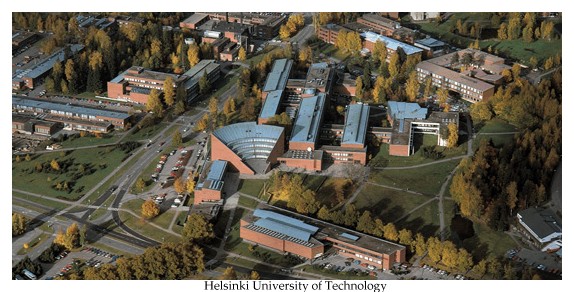
I would like to see more like this from security vendors/service providers in industry: F-Secure has created a malware analysis course at the Helsinki University of Technology. Here's a link to the course details, they're using Peter Szor's (of Symantec) book: The Art of Computer Virus Research and Defense.

Wednesday, October 10, 2007
Trusted vs Trustworthy
From a recent Secunia advisory post:
What Secunia means to say is:
There is a huge difference between trustworthiness and trust. Trust is an action and, as a result, a set of relationships (e.g. Alice trusts Bob; Bob trusts Charlie; therefore, Alice transitively trusts Charlie). Trustworthiness is an estimate of something's (or someone's) worthiness of receiving somebody else's trust. Trust relationships can be mapped out-- it just takes time. Trustworthiness, on the other hand, is very difficult to quantify accurately. I also just discussed this in the context of open source and security.
If those of us in the security community don't get the difference between trust and trustworthiness, then how in the world will our systems protect users who may never understand?
"Solution:What a paradox. "Trust" is an action. If you browse to a website, you are trusting that website. If you clicked a link, then you trusted that link. An "untrusted" PDF file is one that was never opened. By contrast, an opened PDF file is a trusted file. Why are they instructing you to do what you already do?
Do not browse untrusted websites, follow untrusted links, or open untrusted .PDF files." [italics are mine]
What Secunia means to say is:
"Do not browse untrustworthy websites, follow untrustworthy links, or open untrustworthy .PDF files."
There is a huge difference between trustworthiness and trust. Trust is an action and, as a result, a set of relationships (e.g. Alice trusts Bob; Bob trusts Charlie; therefore, Alice transitively trusts Charlie). Trustworthiness is an estimate of something's (or someone's) worthiness of receiving somebody else's trust. Trust relationships can be mapped out-- it just takes time. Trustworthiness, on the other hand, is very difficult to quantify accurately. I also just discussed this in the context of open source and security.
If those of us in the security community don't get the difference between trust and trustworthiness, then how in the world will our systems protect users who may never understand?
Friday, October 5, 2007
About "Backdoors" ...
Again, inspired by the PGP WDE Bypass Issue ...
I am not the only one in the world that uses the term "backdoor" in a generic, non-cryptographic, opposite of your-favorite-national-security-or-mafia-organization-is-going-to-get-you sort of way.
Here are several sources that are considered (at least somewhat) reputable:
Princeton's Wordnet:
Search for yourself. While the use of the term may have prompted a media over-hype, I was not out of line in my word usage. [I removed the term from the parent post anyway, because I do not wish any harm to PGP as a company.] Rarely, if ever, is "backdoor" synonymous with paranoia surrounding an agency having access to your private keys, except ... perhaps ... maybe in a slashdot thread.
UPDATED: Adobe's PDF vulnerability is a current event that illustrates how other people in the "security community" use the word "backdoor" beyond just mathematical-cryptographic access control bypasses.
I am not the only one in the world that uses the term "backdoor" in a generic, non-cryptographic, opposite of your-favorite-national-security-or-mafia-organization-is-going-to-get-you sort of way.
Here are several sources that are considered (at least somewhat) reputable:
Princeton's Wordnet:
"an undocumented way to get access to a computer system or the data it contains"Wikipedia (supposedly the opinion of the general public, mind you)
"A backdoor in a computer system (or cryptosystem or algorithm) is a method of bypassing normal authentication, securing remote access to a computer, obtaining covert access to plaintext, and so on, while attempting to remain undetected. The backdoor may take the form of an installed program (e.g., Back Orifice), or could be a modification to an existing program and/or hardware device."Search Security/Tech Target:
"A back door is a means of access to a computer program that bypasses security mechanisms."F-Secure (in the context of malware):
"Backdoors are remote administration utilities that open infected machines to external control via the Internet or a local network."Albany University's Information Security glossary:
"Normally installed by a virus or worm, a backdoor is a alternate method of accessing a system."The Net Guy (whoever that is-- Google had his definition):
"A means of access to a computer system that bypasses security mechanisms, installed sometimes by an authorized person, sometimes by an attacker. Often installed by programs called Trojans horse programs."And one of my favorite ones, in light of everything recently:
"Also called a trapdoor. An undocumented way of gaining access to a program, online service or an entire computer system. The backdoor is written by the programmer who creates the code for the program. It is often only known by the programmer. A backdoor is a potential security risk."
Search for yourself. While the use of the term may have prompted a media over-hype, I was not out of line in my word usage. [I removed the term from the parent post anyway, because I do not wish any harm to PGP as a company.] Rarely, if ever, is "backdoor" synonymous with paranoia surrounding an agency having access to your private keys, except ... perhaps ... maybe in a slashdot thread.
UPDATED: Adobe's PDF vulnerability is a current event that illustrates how other people in the "security community" use the word "backdoor" beyond just mathematical-cryptographic access control bypasses.
Thursday, October 4, 2007
Are Security Model's Bankrupt: Microsoft's Stride Chart
Over on the Microsoft SDL (Security Development Lifecycle) blog, there's a post about a security tool Microsoft uses in their threat modeling process called the "Stride Chart". Why is it that Microsoft's Stride Chart appears to be such a weird derivation of Donn Parker's Hexad? Here are the components Microsoft uses to estimate security threats:

First of all, there is some controversy surrounding Parker's Hexad, roughly because it does appear to just be a more detailed model of its parent, the CIA Triad. But looking at the Stride Chart, I have to wonder why Microsoft has chosen six main "threat categories" (not three: CIA), but not the exact same six as the Hexad: Confidentiality, Integrity, and Availability, buffeted by Possession/Control, Authenticity, and Utility. Why Authorization and Non-Repudiation and not Utility and Possession as well? Isn't Non-Repudiation and Authenticity a hair-splitting, English-has-too-many-synonyms type of oversight?
Are security models bankrupt? Has Microsoft (and others, because this Stride Chart is getting head nods) reduced to adding every last security buzzword to their lists? Can the basic security models we use be simplified any further? And, very importantly, where are the logic proofs that formally establish these principles as the foundation upon which all security solutions should be built?
Or, is the security industry so busy building money-making solutions that fundamentals are ignored?
- Authentication
- Integrity
- Non-Repudiation
- Confidentiality
- Availability
- Authorization

First of all, there is some controversy surrounding Parker's Hexad, roughly because it does appear to just be a more detailed model of its parent, the CIA Triad. But looking at the Stride Chart, I have to wonder why Microsoft has chosen six main "threat categories" (not three: CIA), but not the exact same six as the Hexad: Confidentiality, Integrity, and Availability, buffeted by Possession/Control, Authenticity, and Utility. Why Authorization and Non-Repudiation and not Utility and Possession as well? Isn't Non-Repudiation and Authenticity a hair-splitting, English-has-too-many-synonyms type of oversight?
Are security models bankrupt? Has Microsoft (and others, because this Stride Chart is getting head nods) reduced to adding every last security buzzword to their lists? Can the basic security models we use be simplified any further? And, very importantly, where are the logic proofs that formally establish these principles as the foundation upon which all security solutions should be built?
Or, is the security industry so busy building money-making solutions that fundamentals are ignored?
Wednesday, September 12, 2007
Se Cura: Free of Care or Worry
"Secure" derives from the Latin words se, meaning "without", and cura, meaning "care" or "worry". In simplest terms, being secure means not having to worry about security. Threats to well-being are just not of concern.
This is important to note as most people use the term "secure" to mean a variety of different things. There's some people who use "secure" interchangeably with the elements from the CIA Triad. There are some who mean that an asset is important and adequately protected. And there are those who even use "secure" to mean "comfortable", as in "I am secure with who I am". What's surprising is how close the last use really is to its etymological roots. There are even those who use "secure" to mean physically fastened to another object. Personally, I am most frustrated with people who use the word "secure" or "security" interchangeably with, say, Confidentiality, because it shows a flagrant ignorance into the bigger picture of what it takes for, say, users of a system to be comfortable that their information assets are truly safe. Clearly, more is needed than just Confidentiality, hence all of these models like the CIA Triad and Parker's Hexad. [For the record, I think both of those models are inaccurate, but that's for another time.]
Subscribe to:
Posts (Atom)